Tuesday, February 20, 2007
A Good Review Of Why The Left Was Right ( Correct)
A dose of nostalgia, truth and a call to action. B. Thanks to Bob T once again .http://www.dailykos.com/story/2007/2/16/135644/137From: "Mike Kramer"


Friday, February 09, 2007
Thursday, February 08, 2007


Tuesday, February 06, 2007
Thursday, February 01, 2007
Molly Ivins
Thanks to Bob T.If you like this article, please consider subscribing to The Nation atspecial discounted rates. You can order online athttps://ssl.thenation.com/sumo/EMAILARTLINK or call our toll-free numberat 1-800-333-8536.Thought you would be interested in this article from The Nation. Remembering Molly Ivins by John Nichols Washington Correspondent, The Nation Molly Ivins always said she wanted to write a book about the lonely experience of East Texas civil rights campaigners to be titled No One Famous Ever Came. While the television screens and newspapers told the stories of the marches, the legal battles and the victories of campaigns against segregation in Alabama and Mississippi, Ivins recalled, the foes of Jim Crow laws in the region where she came of age in the 1950s and '60s often labored in obscurity without any hope that they would be joined on the picket lines by Nobel Peace Prize winners, folk singers, Hollywood stars or senators.And Ivins loved those righteous strugglers all the more for their willingness to carry on.The warmest-hearted populist ever to pick up a pen with the purpose of calling the rabble to the battlements, Ivins understood that change came only when some citizen in some off-the-map town passed a petition, called a Congressman or cast an angry vote to throw the bums out. The nation's mostly widely syndicated progressive columnist, who died January 31 at age 62 after a long battle with what she referred to as a "scorching case of cancer," adored the activists she celebrated from the time in the late 1960s when she created her own "Movements for Social Change" beat at the old Minneapolis Tribune and started making heroes of "militant blacks, angry Indians, radical students, uppity women and a motley assortment of other misfits and troublemakers.""Troublemaker" might be a term of derision in the lexicon of some journalists--particularly the on-bended-knee White House press pack that Ivins studiously refused to run with--but to Molly it was a term of endearment. If anyone anywhere was picking a fight with the powerful, she was writing them up with the same passionate language she employed when her friend the great Texas liberal Billie Carr passed on in 2002. Ivins recalled Carr "was there for the workers and the unions, she was there for the African-Americans, she was there for the Hispanics, she was there for the women, she was there for the gays. And this wasn't all high-minded, oh, we-should-all-be-kinder-to-one-another. This was tough, down, gritty, political trench warfare; money against people. She bullied her way to the table of power, and then she used that place to get everybody else there, too. If you ain't ready to sweat, and you ain't smart enough to deal, you can't play in her league."Molly Ivins could have played in the league of the big boys. They invited her in, giving her a bureau chief job with the New York Times--which she wrote her way out of when she referred to a "community chicken-killing festival" in a small town as a "gang-pluck." Leaving the Times in 1982 was the best thing that ever happened to Molly. She settled back in her home state of Texas, where her friend Jim Hightower was about to get elected as agricultural commissioner and another friend named Ann Richards was striding toward the governorship. As a newspaper columnist for the old Dallas Times Herald--and, after that paper's demise, for the Fort Worth Star-Telegram--Molly began writing a political column drenched in the good humor and fighting spirit of that populist moment. It appealed beyond Texas, and within a decade she was writing for 400 papers nationwide.As it happened, the populist fires faded in Texas, and the state started spewing out the byproducts of an uglier political tradition--the oil-money plutocracy--in the form of George Bush and Dick Cheney.It mattered, a lot, that Molly was writing for papers around the country during the Bush interregnum. She explained to disbelieving Minnesotans and Mainers that, yes, these men really were as mean, as self-serving and as delusional as they seemed. The book that Molly and her pal Lou Dubose wrote about their homeboy-in-chief, Shrub: The Short But Happy Political Life of George W. Bush (Random House, 2000), was the essential exposé of the man the Supreme Court elected President. And Ivins's columns tore away any pretense of civility or citizenship erected by the likes of Karl Rove.When Washington pundits started counseling bipartisanship after voters routed the Republicans in the 2006 elections, Molly wrote, "The sheer pleasure of getting lessons in etiquette from Karl Rove and the right-wing media passeth all understanding. Ever since 1994, the Republican Party has gone after Democrats with the frenzy of a foaming mad dog. There was the impeachment of Bill Clinton, not to mention the trashing of both Clinton and his wife--accused of everything from selling drugs to murder--all orchestrated by that paragon of manners, Tom DeLay.... So after 12 years of tolerating lying, cheating and corruption, the press is prepared to lecture Democrats on how to behave with bipartisan manners."Given Bush's record with the truth, this bipartisanship sounds like a bad idea on its face," Ivins continued, in a column that warned any Democrat who might think to make nice with President and his team that "These people are not only dishonest--they're not even smart."Her readers cheered that November 9, 2006, column, as they did everything Molly wrote. And the cheers came loudest from those distant corners of Kansas and Mississippi where, often, her words were the only dissents that appeared in the local papers during the long period of diminished discourse following 9/11. For the liberal faithful in Boise and Biloxi and Beaumont, she was a lifeline--telling them that, yes, Henry Kissinger was "an old war criminal," that Bush had created a "an honest to goodness constitutional crisis" when it embarked on a program of warrantless wiretapping and that Bill Moyers should seek the presidency because "I want to vote for somebody who's good and brave and who should win." (The Moyers boomlet was our last co-conspiracy, and in Molly's honor, I'm thinking of writing in his name on my Democratic primary ballot next year.)For the people in the places where no one famous ever came, Molly Ivins arrived a couple of times a week in the form of columns that told the local rabble-rousers that they were the true patriots, that they damn well better keep pitching fits about the war and the Patriot Act and economic inequality, and that they should never apologize for defending "those highest and best American ideas" contained in the Bill of Rights.Often, Molly actually did come--in all of her wisecracking, pot-stirring populist glory.Keeping a promise she'd made when her old friend and fellow Texan John Henry Faulk was on his deathbed, Molly accepted a steady schedule of invites to speak for local chapters of the American Civil Liberties Union in dozens of communities, from Toledo to Sarasota to Medford, Oregon. Though she could have commanded five figures, she took no speaker's fee. She just came and told the crowds to carry on for the Constitution. "I know that sludge-for-brains like Bill O'Reilly attack the ACLU for being 'un-American,' but when Bill O'Reilly's constitutional rights are violated, the ACLU will stand up for him just like they did for Oliver North, Communists, the KKK, atheists, movement conservatives and everyone else they've defended over the years," she told them. "The premise is easily understood: If the government can take away one person's rights, it can take away everyone's."She also told them, even when she was battling cancer and Karl Rove, that they should relish the lucky break of their consciences and their conflicts. Speaking truth to power is the best job in any democracy, she explained. It took her to towns across this great yet battered land to say: "So keep fightin' for freedom and justice, beloveds, but don't you forget to have fun doin' it. Lord, let your laughter ring forth. Be outrageous, ridicule the fraidy-cats, rejoice in all the oddities that freedom can produce. And when you get through kickin' ass and celebratin' the sheer joy of a good fight, be sure to tell those who come after how much fun it was."This article can be found on the web at:http://www.thenation.com/doc/20070219/molly_ivinsVisit The Nationhttp://www.thenation.com/Subscribe to The Nation:https://ssl.thenation.com/
Thursday, January 18, 2007
Tradition
During a service at an old synagogue in Eastern Europe, when the Shema (this is perhaps the key prayer of the service) prayer was said, half the congregants stood up and half remained sitting. The half that was seated started yelling at those standing to sit down, and the ones standing yelled at the ones sitting to stand up. The rabbi, learned as he was in the Law and commentaries, didn't know what to do. His congregation suggested that he consult a housebound 98 year old man who was one of the original founders of their temple. The rabbi hoped The elderly man would be able to tell him what the actual temple tradition was, so he went to the nursing home with a representative of each faction of the congregation.The one whose followers stood during Shema said to the old man, "Is the tradition to stand during this prayer?"The old man answered, "No, that is not the tradition."The one whose followers sat said, "Then the tradition is to sit during Shema!"The old man answered, "No, that is not the tradition."Then the rabbi said to the old man, "But the congregants fight all the time, yelling at each other about whether they should sit or stand."The old man interrupted, exclaiming, "THAT is the tradition!"
Friday, January 12, 2007


Wednesday, January 03, 2007
Itche Goldberg, Yiddish Advocate, 102, Dies
By ARI L. GOLDMAN New York Times
Published: January 3, 2007
Itche Goldberg, a champion of Yiddish who wrote and edited and taught his beloved language in the face of all those who said keeping Yiddish alive was a lost cause, died last Wednesday at his home in Manhattan. He was 102.
He died of complications of cancer, his son, David, said.
Passing on the Yiddish tradition to future generations was the passion of Itche Goldberg’s life. He promoted the language in every conceivable form: writing poetry, librettos, children’s books and essays and running Yiddish schools and summer camps. His book “Yiddish Stories for Young People” is still used in the shrinking network of secular Yiddish schools.
Mr. Goldberg’s final collection of essays in Yiddish, “Essayen Tsvey” (“Essays Two”), was published in 2004 on his 100th birthday.
In secular Yiddish circles, Mr. Goldberg is best known as the editor of one of the longest-running journals of Yiddish literature, Yidishe Kultur. He served as editor from 1964 to 2004, when he published the journal’s final issue.
Mr. Goldberg was a veteran of the heated ideological wars of the 20th century over Judaism, Yiddish, socialism and communism. He quit a job at a Yiddish summer camp in Canada in the 1920s after a fight with the anarchist Emma Goldman over the Sacco and Vanzetti case. And he was no fan of the writer Isaac Bashevis Singer, who won the Nobel Prize in literature in 1978. He published an essay criticizing Singer as failing to reflect the humanist and social ideals that Mr. Goldberg felt were the central themes of Yiddish culture.
He never stopped championing Yiddish, in whatever form, even in the face of evidence that fewer and fewer people were interested in it.
“We’re dealing with a language that is about 1,000 years old and a literature that is 600 or 700 years old,” he once said. “What developed was an extraordinary and profound modern literature which would become the equivalent of French or German literature.”
Yiddish is a Germanic language that developed as the lingua franca of the Ashkenazic Jewry by incorporating Hebrew and borrowing liberally from the different European lands where Jews lived. The use of Yiddish has greatly diminished, with the notable exception of its use among Hasidic Jews who continue to speak the language of the European Jewish communities from which they sprang.
Mr. Goldberg was decidedly secular. But as he told an interviewer not long ago, “Just because I’m secular doesn’t mean I’m antireligious.” What was important about Judaism, he said, was its progressive values and not its religious rituals. He pushed for more Jewish content in the Yiddish schools of his day, including more study of the Bible and of Jewish holidays, to the dismay of some of his anti-religious colleagues.
Isaac Goldberg was born in Apt, Poland, on March 22, 1904. From early childhood everyone called him Itche, a diminutive form of Isaac. In 1920 he moved to Toronto, where he taught Yiddish at the Workmen’s Circle/Arbeter Ring School, which promoted a socialist ideology. Later, when he moved to New York, he broke with Workmen’s Circle and embraced communism, seeing the Soviet Union as the salvation for Jewish national and social problems. He became the cultural and national school director of the Jewish People’s Fraternal Order, a branch of the pro-Communist International Workers Order.
Mr. Goldberg repudiated Communist ideology in the 1950s when the Stalinist regime’s horrors became apparent, particularly the execution of Jewish writers in 1952.
Although he was threatened with deportation because of his Communist activities, Mr. Goldberg was able to remain in the United States, and eventually became an American citizen. From 1970 to 1985, he was a professor of Yiddish language and literature at Queens College.
Two years ago, in honor of his 100th birthday, a group of Jewish musicians performed an adaptation of I. L. Peretz’s “Oyb Nit Nokh Hekher” (“If Not Even Higher”), with a libretto by Mr. Goldberg. It was one of more than 20 works that he wrote with the composer Moyshe Rauch.
In addition to his son, who lives in Manhattan, Mr. Goldberg is survived by his wife of 67 years, the former Jennie Wilensky, who is 101; a daughter, Susan, of Manhattan; two granddaughters; and two great-grandchildren.
Mr. Goldberg fought to keep his magazine Yidishe Kultur alive right to the end of his life.
In an interview in 2004 he said: “I only have two dreams. One dream is that someone will knock on the door and I will open it and they give me a check for $150,000 for the magazine. Second dream is that someone knocks at the door and I open it up and he gives me a corned beef sandwich. Those are my only two dreams. I’m not asking for much. Really, I’m not. And I think they’re both reachable.”
.
Published: January 3, 2007
Itche Goldberg, a champion of Yiddish who wrote and edited and taught his beloved language in the face of all those who said keeping Yiddish alive was a lost cause, died last Wednesday at his home in Manhattan. He was 102.
He died of complications of cancer, his son, David, said.
Passing on the Yiddish tradition to future generations was the passion of Itche Goldberg’s life. He promoted the language in every conceivable form: writing poetry, librettos, children’s books and essays and running Yiddish schools and summer camps. His book “Yiddish Stories for Young People” is still used in the shrinking network of secular Yiddish schools.
Mr. Goldberg’s final collection of essays in Yiddish, “Essayen Tsvey” (“Essays Two”), was published in 2004 on his 100th birthday.
In secular Yiddish circles, Mr. Goldberg is best known as the editor of one of the longest-running journals of Yiddish literature, Yidishe Kultur. He served as editor from 1964 to 2004, when he published the journal’s final issue.
Mr. Goldberg was a veteran of the heated ideological wars of the 20th century over Judaism, Yiddish, socialism and communism. He quit a job at a Yiddish summer camp in Canada in the 1920s after a fight with the anarchist Emma Goldman over the Sacco and Vanzetti case. And he was no fan of the writer Isaac Bashevis Singer, who won the Nobel Prize in literature in 1978. He published an essay criticizing Singer as failing to reflect the humanist and social ideals that Mr. Goldberg felt were the central themes of Yiddish culture.
He never stopped championing Yiddish, in whatever form, even in the face of evidence that fewer and fewer people were interested in it.
“We’re dealing with a language that is about 1,000 years old and a literature that is 600 or 700 years old,” he once said. “What developed was an extraordinary and profound modern literature which would become the equivalent of French or German literature.”
Yiddish is a Germanic language that developed as the lingua franca of the Ashkenazic Jewry by incorporating Hebrew and borrowing liberally from the different European lands where Jews lived. The use of Yiddish has greatly diminished, with the notable exception of its use among Hasidic Jews who continue to speak the language of the European Jewish communities from which they sprang.
Mr. Goldberg was decidedly secular. But as he told an interviewer not long ago, “Just because I’m secular doesn’t mean I’m antireligious.” What was important about Judaism, he said, was its progressive values and not its religious rituals. He pushed for more Jewish content in the Yiddish schools of his day, including more study of the Bible and of Jewish holidays, to the dismay of some of his anti-religious colleagues.
Isaac Goldberg was born in Apt, Poland, on March 22, 1904. From early childhood everyone called him Itche, a diminutive form of Isaac. In 1920 he moved to Toronto, where he taught Yiddish at the Workmen’s Circle/Arbeter Ring School, which promoted a socialist ideology. Later, when he moved to New York, he broke with Workmen’s Circle and embraced communism, seeing the Soviet Union as the salvation for Jewish national and social problems. He became the cultural and national school director of the Jewish People’s Fraternal Order, a branch of the pro-Communist International Workers Order.
Mr. Goldberg repudiated Communist ideology in the 1950s when the Stalinist regime’s horrors became apparent, particularly the execution of Jewish writers in 1952.
Although he was threatened with deportation because of his Communist activities, Mr. Goldberg was able to remain in the United States, and eventually became an American citizen. From 1970 to 1985, he was a professor of Yiddish language and literature at Queens College.
Two years ago, in honor of his 100th birthday, a group of Jewish musicians performed an adaptation of I. L. Peretz’s “Oyb Nit Nokh Hekher” (“If Not Even Higher”), with a libretto by Mr. Goldberg. It was one of more than 20 works that he wrote with the composer Moyshe Rauch.
In addition to his son, who lives in Manhattan, Mr. Goldberg is survived by his wife of 67 years, the former Jennie Wilensky, who is 101; a daughter, Susan, of Manhattan; two granddaughters; and two great-grandchildren.
Mr. Goldberg fought to keep his magazine Yidishe Kultur alive right to the end of his life.
In an interview in 2004 he said: “I only have two dreams. One dream is that someone will knock on the door and I will open it and they give me a check for $150,000 for the magazine. Second dream is that someone knocks at the door and I open it up and he gives me a corned beef sandwich. Those are my only two dreams. I’m not asking for much. Really, I’m not. And I think they’re both reachable.”
.
Thursday, December 28, 2006
Jimmy Carter's Book
http://pdamerica.org/articles/news/2006-12-28-08-49-03-news.php
Jimmy Carter's Sin Against Israel
By Charles Lenchner clenchner01@yahoo.com, PDA Israel/Palestine Working Group CoordinatorDecember 28, 2006.We all knew Jimmy Carter was in for it. Before anyone had read a single paragraph of his book, “Palestine: Peace Not Apartheid,” well known heavy hitters in the media were taking pot shots at the ex-president. Jennifer Siegel of the Forward got it right in saying that “critics of the former president probably will be most offended by his use of the word ‘apartheid.’”(1) In so doing, Carter departed from a particular script that leaders of the pro-Israel community were willing to tolerate from U.S. critics of Israel. The Israel lobby – Jews and non-Jews -- has devoted enormous resources and political capital to supporting Israel. They’ve done a great job, strategically speaking, by funding think tanks, newsletters, endowed chairs, academic centers and media activism shops. These resources are deployed in part to secure short-term victories around policy issues. The larger and ultimately more important role is setting the limits of allowable debate. The terms of debate in the U.S. are: Israeli actions and policy may be criticized, as long as everyone affirms Israel’s motives of only wanting peace and security. However, in Israel proper, other motives are debated constantly. These include a racist desire to subjugate Arabs to Western and Jewish control, greed for land, profit from a captive market, the wish to serve U.S. interests in the Middle East, and of course, classic stupidity, of the kind detailed in Barbara Tuchman’s “The March of Folly.” In choosing to use the word “apartheid,” Carter violates the terms of U.S. debate. True, he does not actually accuse Israel proper of being an apartheid state. Also, he does not consider Israel’s motives to be racist. The term does however, connote moral obtuseness, a suggestion that some part of Israeli policy is wrong in the sense of ”evil,” not just wrong in the sense of “misguided.” We should remember that to its dying days, the white South African regime that gave us the word “apartheid” claimed that it was only acting in its role as a bulwark against communism and anarchy, and not on behalf of the white race. Gandhi famously said, “First they ignore you, then they laugh at you, then they fight you, then you win.” When John Mearsheimer and Stephen Walt wrote an academic paper about the Israeli Lobby, they were ridiculed for appearing to support the myth of Jewish control of Congress and the media. But they did succeed in getting widespread notice. Carter follows the path they cleared, with the powerful footsteps of an ex-president known for ensuring fair elections and housing the homeless. Where Mearsheimer and Walt evoked learned essays, Carter has provoked hysterical gnashing of teeth. (Just look at poor Alan Dershowitz jumping up and down in Cambridge, virtually screaming, “Listen to me, not Carter!”) Carter has succeeded, because he gave an emotional narrative of particular appeal to this country’s Christians – still a large majority . He not only explains the facts, he includes the story of how he learned them, as a former president and elder statesmen with extensive Middle East experience. Carter’s view – that Israel’s illegal occupation of Palestine, along with its apartheid policies, violation of UN resolutions, and well documented human rights violations, constitute the driving force of the conflict -- support my own conclusions, and those of most Europeans and our own State Department, although they clash with the self image of Jewish supporters of Israel who wish to preserve their own status as peace- and freedom-loving victims, angry at the Arabs because they “force us to kill their sons.”(2) End the Occuption with the creation of a viable Palestinian state and the conflict will end. This is Carter’s position and one PDA enthusiastically supports. I grew up in Israel and served in her army(3). I live and work in the Jewish community in New York. And of course, I recognize that Israel faces real dilemmas about how to achieve peace and security. Nonetheless, the occupation (in the West Bank) and imprisonment (in Gaza) of Palestinians cannot be described as primarily “misguided.” Occupation is an ongoing and brutalizing evil, carried out by people with limited moral vision and overwhelming military might. It is not in the long-term interests of peace in the region for supporters of Israel gloss over this fact. Nothing can justify what is being done by Israel to the Palestinian people, not even Palestinian terror, extremism and incompetence. The refusal to end the occupation over the last 39 years is most of all a failure of will, not some unfortunate result of Palestinian intransigence. Carter's book will persuade more Americans to point a finger at Israel, and even consider applying serious, option-closing consequences (sanctions) to Israeli actions. If we care about Israel’s survival, we must care enough to apply U.S. political power and will to end the occupation. 1 Carter Book Slaps Israel With ‘Apartheid’ Tag, Provides Ammo to GOP 10/17/06 2 “We can forgive you for killing our sons. But we will never forgive you for making us kill yours.” Golda Meir to Anwar Sadat. 3 I was a refusenik in 1987-1988, preferring to go to prison rather than enter the West Bank as a soldier.
Jimmy Carter's Sin Against Israel
By Charles Lenchner clenchner01@yahoo.com, PDA Israel/Palestine Working Group CoordinatorDecember 28, 2006.We all knew Jimmy Carter was in for it. Before anyone had read a single paragraph of his book, “Palestine: Peace Not Apartheid,” well known heavy hitters in the media were taking pot shots at the ex-president. Jennifer Siegel of the Forward got it right in saying that “critics of the former president probably will be most offended by his use of the word ‘apartheid.’”(1) In so doing, Carter departed from a particular script that leaders of the pro-Israel community were willing to tolerate from U.S. critics of Israel. The Israel lobby – Jews and non-Jews -- has devoted enormous resources and political capital to supporting Israel. They’ve done a great job, strategically speaking, by funding think tanks, newsletters, endowed chairs, academic centers and media activism shops. These resources are deployed in part to secure short-term victories around policy issues. The larger and ultimately more important role is setting the limits of allowable debate. The terms of debate in the U.S. are: Israeli actions and policy may be criticized, as long as everyone affirms Israel’s motives of only wanting peace and security. However, in Israel proper, other motives are debated constantly. These include a racist desire to subjugate Arabs to Western and Jewish control, greed for land, profit from a captive market, the wish to serve U.S. interests in the Middle East, and of course, classic stupidity, of the kind detailed in Barbara Tuchman’s “The March of Folly.” In choosing to use the word “apartheid,” Carter violates the terms of U.S. debate. True, he does not actually accuse Israel proper of being an apartheid state. Also, he does not consider Israel’s motives to be racist. The term does however, connote moral obtuseness, a suggestion that some part of Israeli policy is wrong in the sense of ”evil,” not just wrong in the sense of “misguided.” We should remember that to its dying days, the white South African regime that gave us the word “apartheid” claimed that it was only acting in its role as a bulwark against communism and anarchy, and not on behalf of the white race. Gandhi famously said, “First they ignore you, then they laugh at you, then they fight you, then you win.” When John Mearsheimer and Stephen Walt wrote an academic paper about the Israeli Lobby, they were ridiculed for appearing to support the myth of Jewish control of Congress and the media. But they did succeed in getting widespread notice. Carter follows the path they cleared, with the powerful footsteps of an ex-president known for ensuring fair elections and housing the homeless. Where Mearsheimer and Walt evoked learned essays, Carter has provoked hysterical gnashing of teeth. (Just look at poor Alan Dershowitz jumping up and down in Cambridge, virtually screaming, “Listen to me, not Carter!”) Carter has succeeded, because he gave an emotional narrative of particular appeal to this country’s Christians – still a large majority . He not only explains the facts, he includes the story of how he learned them, as a former president and elder statesmen with extensive Middle East experience. Carter’s view – that Israel’s illegal occupation of Palestine, along with its apartheid policies, violation of UN resolutions, and well documented human rights violations, constitute the driving force of the conflict -- support my own conclusions, and those of most Europeans and our own State Department, although they clash with the self image of Jewish supporters of Israel who wish to preserve their own status as peace- and freedom-loving victims, angry at the Arabs because they “force us to kill their sons.”(2) End the Occuption with the creation of a viable Palestinian state and the conflict will end. This is Carter’s position and one PDA enthusiastically supports. I grew up in Israel and served in her army(3). I live and work in the Jewish community in New York. And of course, I recognize that Israel faces real dilemmas about how to achieve peace and security. Nonetheless, the occupation (in the West Bank) and imprisonment (in Gaza) of Palestinians cannot be described as primarily “misguided.” Occupation is an ongoing and brutalizing evil, carried out by people with limited moral vision and overwhelming military might. It is not in the long-term interests of peace in the region for supporters of Israel gloss over this fact. Nothing can justify what is being done by Israel to the Palestinian people, not even Palestinian terror, extremism and incompetence. The refusal to end the occupation over the last 39 years is most of all a failure of will, not some unfortunate result of Palestinian intransigence. Carter's book will persuade more Americans to point a finger at Israel, and even consider applying serious, option-closing consequences (sanctions) to Israeli actions. If we care about Israel’s survival, we must care enough to apply U.S. political power and will to end the occupation. 1 Carter Book Slaps Israel With ‘Apartheid’ Tag, Provides Ammo to GOP 10/17/06 2 “We can forgive you for killing our sons. But we will never forgive you for making us kill yours.” Golda Meir to Anwar Sadat. 3 I was a refusenik in 1987-1988, preferring to go to prison rather than enter the West Bank as a soldier.
Wednesday, December 27, 2006
A Nation Founded On Illegals
Thanks again to Bob T. for this one.
--------------------------------------------------------------------------------December 27, 2006 Op-Ed Contributor, NYT Our Founding Illegals By WILLIAM HOGELAND.EVERY nation is a nation of immigrants. Go back far enough and you'll find us all, millions of potential lives, tucked in the DNA of our African mother, Lucy. But the immigrant experience in the United States is justly celebrated, and perhaps no aspect of that experience is more quintessentially American than our long heritage of illegal immigration. You wouldn't know it from the immigration debate going on all year (the bipartisan immigration bill-in-progress, announced this week, is unlikely to mention it), but America's pioneer values developed in a distinctly illegal context. In 1763, George III drew a line on a map stretching from modern-day Maine to modern-day Georgia, along the crest of the Appalachians. He declared it illegal to claim or settle land west of the line, all of which he reserved for Native Americans.George Washington, a young colonel in the Virginia militia, instructed his land-buying agents in the many ways of getting around the law. Although Washington was not alone in acquiring forbidden tracts, few were as energetic in the illegal acquisition of western land. And Washington was a model of decorum compared to Ethan Allen, a rowdy from Connecticut who settled with his brothers in a part of the Green Mountains known as the Hampshire Grants (later known as "Vermont"). The province of New York held title to the land, but Allen asserted his own kind of claim: He threw New Yorkers out, Tony Soprano style, then offered to sell their lots to what he hoped would be a flood of fellow illegals from Connecticut.Meanwhile, illegal pioneers began moving across the Alleghenies and into the upper Ohio Valley, violating the king's 1763 proclamation and a few more besides. (George would today be accused of softness on immigration; he kept shifting the line westward.) Immigrants from such déclassé spots as Germany and Ireland violated the laws and settled where they pleased. The upper Ohio was rife with illegal immigrants, ancestors of people who, in country clubs today, are implying a Mayflower ancestry.Parallels to today's illegal immigration are striking. Then as now, it was potentially deadly to bring a family across the line. But once across, illegals had a good chance of avoiding arrest and settling in. Border patrols, in the forms of the British Army and provincial militias, were stretched thin. The 18th-century forest primeval, like a modern city, offered ample opportunities for getting lost. Complex economies thrived in the virgin backwoods, unfettered by legitimate property titles. When conflicts developed between the first and second waves of illegals, some salient social ironies arose, too. By the early 1770's, George Washington had amassed vast tracts to which his titles were flatly invalid. The Revolution rectified that. With British law void, Washington emerged from the war with his titles legal by default. But he acquired another problem: low-class illegals were squatting on his newly authenticated, highly valuable property.Washington harbored no fond feeling for breakers of laws that he too had recently flouted. "It is hard upon me," he lamented without irony, "to have property which has been fairly obtained disputed and withheld." He went to court to have the squatters evicted, complaining that they had "not taken those necessary steps pointed out by the law." He was appealing to righteousness from atop a high but wobbly horse. Descendants of the great immigration experiences of the 19th and 20th centuries visit the Ellis Island Immigration Museum to learn of the tribulations of ancestors who risked much to become Americans. Those of us whose ancestors risked everything as illegal immigrants, and in the process helped found a nation, owe our forebears a debt of gratitude, too. Without their daring disregard of immigration laws, we might not be here today.William Hogeland is the author of "The Whiskey Rebellion: George Washington, Alexander Hamilton and the Frontier Rebels Who Challenged America's Newfound Sovereignty."
--------------------------------------------------------------------------------December 27, 2006 Op-Ed Contributor, NYT Our Founding Illegals By WILLIAM HOGELAND.EVERY nation is a nation of immigrants. Go back far enough and you'll find us all, millions of potential lives, tucked in the DNA of our African mother, Lucy. But the immigrant experience in the United States is justly celebrated, and perhaps no aspect of that experience is more quintessentially American than our long heritage of illegal immigration. You wouldn't know it from the immigration debate going on all year (the bipartisan immigration bill-in-progress, announced this week, is unlikely to mention it), but America's pioneer values developed in a distinctly illegal context. In 1763, George III drew a line on a map stretching from modern-day Maine to modern-day Georgia, along the crest of the Appalachians. He declared it illegal to claim or settle land west of the line, all of which he reserved for Native Americans.George Washington, a young colonel in the Virginia militia, instructed his land-buying agents in the many ways of getting around the law. Although Washington was not alone in acquiring forbidden tracts, few were as energetic in the illegal acquisition of western land. And Washington was a model of decorum compared to Ethan Allen, a rowdy from Connecticut who settled with his brothers in a part of the Green Mountains known as the Hampshire Grants (later known as "Vermont"). The province of New York held title to the land, but Allen asserted his own kind of claim: He threw New Yorkers out, Tony Soprano style, then offered to sell their lots to what he hoped would be a flood of fellow illegals from Connecticut.Meanwhile, illegal pioneers began moving across the Alleghenies and into the upper Ohio Valley, violating the king's 1763 proclamation and a few more besides. (George would today be accused of softness on immigration; he kept shifting the line westward.) Immigrants from such déclassé spots as Germany and Ireland violated the laws and settled where they pleased. The upper Ohio was rife with illegal immigrants, ancestors of people who, in country clubs today, are implying a Mayflower ancestry.Parallels to today's illegal immigration are striking. Then as now, it was potentially deadly to bring a family across the line. But once across, illegals had a good chance of avoiding arrest and settling in. Border patrols, in the forms of the British Army and provincial militias, were stretched thin. The 18th-century forest primeval, like a modern city, offered ample opportunities for getting lost. Complex economies thrived in the virgin backwoods, unfettered by legitimate property titles. When conflicts developed between the first and second waves of illegals, some salient social ironies arose, too. By the early 1770's, George Washington had amassed vast tracts to which his titles were flatly invalid. The Revolution rectified that. With British law void, Washington emerged from the war with his titles legal by default. But he acquired another problem: low-class illegals were squatting on his newly authenticated, highly valuable property.Washington harbored no fond feeling for breakers of laws that he too had recently flouted. "It is hard upon me," he lamented without irony, "to have property which has been fairly obtained disputed and withheld." He went to court to have the squatters evicted, complaining that they had "not taken those necessary steps pointed out by the law." He was appealing to righteousness from atop a high but wobbly horse. Descendants of the great immigration experiences of the 19th and 20th centuries visit the Ellis Island Immigration Museum to learn of the tribulations of ancestors who risked much to become Americans. Those of us whose ancestors risked everything as illegal immigrants, and in the process helped found a nation, owe our forebears a debt of gratitude, too. Without their daring disregard of immigration laws, we might not be here today.William Hogeland is the author of "The Whiskey Rebellion: George Washington, Alexander Hamilton and the Frontier Rebels Who Challenged America's Newfound Sovereignty."
Friday, December 22, 2006
Music Videos From YouTube
I’m sending out this group of songs that I found on YouTube. If you haven’t checked it out , be prepared to spend a lot of time there. There’s great old clips and more that gets added all the time. Happy everything and anything you celebrate. If you find something you like, send it to me.
Peace and justice,
Gerry
http://www.youtube.com/watch?v=cLresN6yZEY Spoon Guitar
http://www.youtube.com/watch?v=IkMMluFiMiQ Uncle Pen Bill Monroe
http://www.youtube.com/watch?v=X-C9BqADIWE Peggy Lee Why Don’t You Do Right
http://www.youtube.com/watch?v=f4Qtqw9Eec0 Milton Nascimento – Uakti – Lagrima do Sul
http://www.youtube.com/watch?v=l9qqTI3YrHk Grapevine Antonio Forcione
http://www.youtube.com/watch?v=BxYV1jGuj5U Caravan Van Morrison and The Band
http://www.youtube.com/watch?v=bXEWzq0UANA Jamaican Jewish Wedding
http://www.youtube.com/watch?v=0pXgVzFHcSs Just Over In The Glory Land Stanley Brothers and Reno and Smiley
http://www.youtube.com/watch?v=0U-_gMpdXBI Caravan Duke Ellington
http://www.youtube.com/watch?v=_GG2v8LBcBU Koko Little Walter
http://www.youtube.com/watch?v=rbM7oAz3bS8 John Coltrane Naima
http://www.youtube.com/watch?v=eZ8jAafAkrM Chava Alberstein Klezmatics Mayn Schvester Chaya
Peace and justice,
Gerry
http://www.youtube.com/watch?v=cLresN6yZEY Spoon Guitar
http://www.youtube.com/watch?v=IkMMluFiMiQ Uncle Pen Bill Monroe
http://www.youtube.com/watch?v=X-C9BqADIWE Peggy Lee Why Don’t You Do Right
http://www.youtube.com/watch?v=f4Qtqw9Eec0 Milton Nascimento – Uakti – Lagrima do Sul
http://www.youtube.com/watch?v=l9qqTI3YrHk Grapevine Antonio Forcione
http://www.youtube.com/watch?v=BxYV1jGuj5U Caravan Van Morrison and The Band
http://www.youtube.com/watch?v=bXEWzq0UANA Jamaican Jewish Wedding
http://www.youtube.com/watch?v=0pXgVzFHcSs Just Over In The Glory Land Stanley Brothers and Reno and Smiley
http://www.youtube.com/watch?v=0U-_gMpdXBI Caravan Duke Ellington
http://www.youtube.com/watch?v=_GG2v8LBcBU Koko Little Walter
http://www.youtube.com/watch?v=rbM7oAz3bS8 John Coltrane Naima
http://www.youtube.com/watch?v=eZ8jAafAkrM Chava Alberstein Klezmatics Mayn Schvester Chaya
Saturday, December 16, 2006
The Fairness of Capitalism
INCOME SCORECARD 1979-2004 BOTTOM 60% OF AMERICANS: DOWN 5%60TH-80TH PERCENTILE: UP 2% TOP 5% OF AMERICANS: UP 53% TOP 1% OF AMERICANS: UP 248% DAVID CAY JOHNSTON, NY TIMES - Despite significant gains in 2004, the total income Americans reported to the tax collector that year,adjusted for inflation, was still below its peak in 2000, new government data shows. Reported income totaled $7.044 trillion in2004, the latest year for which data is available, down from more than$7.143 trillion in 2000, new Internal Revenue Service data shows. . .The overall income declines . . . came despite a series of tax cutsthat President Bush and Congressional Republicans promoted as the bestway to stimulate both short and long-term growth after the Internetbubble burst on Wall Street in 2000 and the economy fell into a briefrecession in 2001. . .Very top households, which include about 300,000 Americans, reported significantly more pretax income combined than the poorest 120 million Americans earned in 2004, the data show. This was a sharp change from 1979, the oldest year examined by the I.R.S., when the thin slice at the top received about one-third of the total income of the big group at the bottom.Over all, average incomes rose 27 percent in real terms over thequarter-century from 1979 through 2004. But the gains were narrowlyconcentrated at the top and offset by losses for the bottom 60 percentof Americans, those making less than $38,761 in 2004.The bottom 60 percent of Americans, on average, made less than 95cents in 2004 for each dollar they reported in 1979, analysis of the I.R.S. data shows.The next best-off group, the fifth of Americans on the 60th to 80 thrungs of the income ladder, averaged 2 cents more income in 2004 foreach dollar they earned in 1979.Only those in the top 5 percent had significant gains. The average income of those on the 95th to 99th rungs of the income ladder rose by 53 percent, almost twice the average rate.A third of the entire national increase in reported income went to thetop 1 percent and more than half of that went to the top tenth of 1 percent, whose average incomes soared so much that for each dollar,adjusted for inflation, that they had in 1979 they had $3.48 in 2004.http://tinyurl.com/yaxw9g
Friday, December 08, 2006
One Minute OF Music Played In A Way You Have Never Heard
http://blogfiles.wfmu.org/KF/2006/05/teaspoon2.mpg I don't know who this is. I got the link from an interview with Cindy Cashdollar.
Monday, December 04, 2006
Andy Statmen Live
I saw him and his trio play at the San Francisco Jewish Community Center last night. The man is simply amazing. He started out on clarinet , ended the first set playing mandolin and played mandolin for the whole second set.His band is really outstanding as well.He and they are tuned into some relationship with sound that one rarely hears. Toping the night off was an appearence by David Grisman, and the evening ended with great duets. Don't miss this show if it comes to your neck of the woods. Most of what happens is spur of the moment so although the recordings are great , what happens on stage is always fresh and wonderful. Andy pulled some great sounds from his well worn snakehead, which he struggled with to get in tune( it happens to the best of us) and won. David played his Giacomel, which I got to play backstage. It's a fantastic instrument in every way, great sound and easy to play.
An added bonus for me was that when I practiced this morning , I felt I was playing better just because of being at the concert and absorbing some of the musicality , fluidity and most of all soulfulness .
Andy's website http://www.andystatman.org/index.htmlCheck out Andy's concerts.
An added bonus for me was that when I practiced this morning , I felt I was playing better just because of being at the concert and absorbing some of the musicality , fluidity and most of all soulfulness .
Andy's website http://www.andystatman.org/index.htmlCheck out Andy's concerts.
Saturday, November 18, 2006
Mazel Tov
Mazel tov to all those not getting married in a castle today.
Mazel tov to all whether you are straight or you are gay.
I'll drink a l'khayim with my best bottle of booze,
And dance with my wife without any shoes.
Mazel tov to all whether you are straight or you are gay.
I'll drink a l'khayim with my best bottle of booze,
And dance with my wife without any shoes.
Tuesday, November 14, 2006
Good Light Bulb Joke
How many members of the Bush administration does it take to change a light bulb?The answer is 10.1. One to deny that a light bulb needs to be changed.2. One to attack the patriotism of anyone who says the light bulb needs to be changed.3. One to blame Clinton for burning out the light bulb.4. One to tell the nations of the world that they are either for changing the light bulb or for darkness.5. One to give a billion dollar no-bid contract to Haliburton for the new light bulb.6. One to arrange a photograph of Bush, dressed as a janitor, standing on a stepladder under the banner, "Mission Accomplished."7. One administration insider to resign and write a book documenting in detail how Bush was literally in the dark.8. One to viciously smear #7.9. One to campaign on TV and at rallies on how George Bush has had a strong light bulb-changing policy all along.10. And finally one to confuse Americans about the difference between screwing a light bulb, and screwing the country.
Saturday, October 28, 2006
Emma Lazurus Statue Of Lberty, Immigration and Judaism
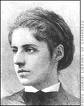
America's voice of liberty, the writer of the Statue of Liberty sonnet is honored around the same time as the election that may decide the fate of immigration.By Esther Schor, ESTHER SCHOR is professor of English at Princeton University and author of a new biography, "Emma Lazarus."October 28, 2006 THIS WEEKEND, Emma Lazarus, whose eloquent words are engraved in the Statue of Liberty, will be honored with a stone in the Poet's Corner at the Cathedral of St. John the Divine in Manhattan. The timing is auspicious because 10 days later, when Americans go to the polls, we will decide anew the fate of her vision for our country as a refuge for immigrants.
These days, famous phrases from Lazarus' resonant 1883 sonnet - "Give me your tired, your poor, your huddled masses yearning to breathe free" - are hurled like salvoes from all sides of the immigration controversy. Those who view immigrants as a threat to our security, our economy and our democracy contrast the accomplishments of the heralded immigrants of the past with the woes they feel are imported by the current wave of arrivals. They would prefer the statue to proclaim, "Keep your huddled masses." Bloggers on the left ask the statue to admonish and accuse: "Huddled masses; muddled laws." And on and on; a Google search for "your tired, your poor" yields about 200,000 results, while "huddled masses" nets almost twice that number.
Voters and politicians alike understand that the lawmakers chosen Nov. 7 will again face the question of whether to slam the door on new immigrants and, if so, how hard. Nevertheless, most candidates have learned something from the debacle of the bipartisan Senate immigration bill that split even the president's party: Immigration is simply too divisive an issue to depend on for votes.Lazarus wrote her famous words in a climate just as divisive. In December 1883, Frederic Auguste Bartholdi's statue, "Liberty Enlightening the World," languished in pieces in Paris because fundraising in the United States to build a pedestal had been abysmally slow. As Joseph Pulitzer, publisher of the New York World, wrote: "We have more than a hundred millionaires in this city, any one of whom might have written a check for the whole sum. But do they care for a Statue of Liberty, which only reminds them of the equality of all citizens of the Republic?"
Born in 1849 to a wealthy Jewish family of Sephardic descent, Lazarus had been an enfant terrible. Her doting father, a sugar merchant, used his fortune to turn her into a publishing superstar at 17. Her precocious fame, along with her magnetism and wit, won her the friendship of such luminaries as Ralph Waldo Emerson and Henry James. She called herself an "outlaw" Jew, was secular and fiercely identified with the Jewish people rather than with Jewish observance. Writing in the mainstream, middlebrow Century magazine, she introduced a national American audience to Jewish culture, history and nationhood and wrote vignettes about the history of anti-Semitism.
With the bloody Russian pogroms of 1881-82, boatloads of Jewish refugees arrived in New York, sometimes at the rate of 2,000 a month. Aid groups raised the specter of "an army of Jewish paupers," and even Jews who could trace their American ancestry back two centuries began to fear anti-Semitic reprisals. If those who raised the alarm had had the genius to invent the term "homeland security," they would surely have done so. Lazarus, in a weekly column in the American Hebrew newspaper, hectored and browbeat complacent American Jews into opening their hearts and pockets to the refugees. She refused to soothe ruffled feathers and calm fears. "It will be a lasting blot upon American Judaism if we do not come forward now with encouragement for the disheartened and help for the helpless," she wrote.
Traditional Jews reviled her disparaging of Jewish law; Reform Jews disparaged her for speaking candidly about anti-Semitism. A lesser figure might have retreated, but she was made of stern stuff. Instead, she advanced. In "The New Colossus," what she had once said to Jews - "Until we are all free, none of us is free" - she said to the nation. Just as Jews were morally obliged to repair the world, she argued, America was morally obliged to succor the nations, to open its doors to the poor and oppressed. That obligation was incurred along with a legacy of rebellion against tyranny.
As unambiguous as she was on the immigration question, Lazarus herself was a woman of contradictions. She was a champion of the oppressed; she was also a snob with an exquisite sense of entitlement. She flaunted her dual identity as an American and as a Jew, believing, unlike her contemporaries, that to be more openly Jewish was to be more deeply American. She pleaded the cause not of a chosen people but of a people who deserved the freedom to choose: what to think, whom to love and befriend, how to earn their bread.A spinster who lived out her life under her father's roof, she inscribed in her poetic legacy an explicit sonnet of erotic desire for a woman that, after her death at 38 from Hodgkin's disease, her grieving sisters squelched. Despite how prolific Lazarus was in her time, her oeuvre of poems, plays, essays, translations and a novel has been whittled down to a single sonnet, "The New Colossus," mounted only after her death in 1887 inside the pedestal of the Statue of Liberty.Enriched by her contradictions, Emma Lazarus spoke with a clear, prophetic fervor, telling the nation that its complexion would change, along with its soul. Within the hard, cold, haughty visage of Gilded Age America, she discerned a mother's face and gave that face a voice.
Thanks To HH for sending me this.
Monday, October 02, 2006

Subscribe to:
Posts (Atom)
